
Bearded Seal
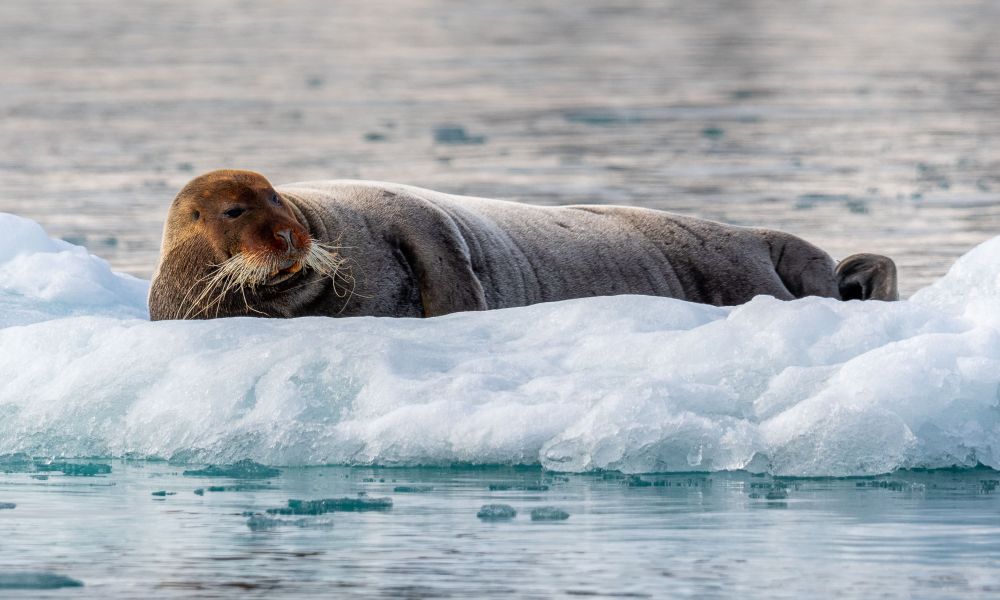
Bearded seals are the largest true seals you’ll see on your Arctic adventure. They are recognized for their long, curling whiskers on their muzzle which give a beard-like appearance. Those whiskers are very sensitive and help the seal find food on the seafloor. You may also catch them “bottling”. This is when they sleep vertically with their head above water.
Bearded seal At a Glance
| Scientific Name | Erignathus barbatus |
| Population | Estimated at ~750,000 globally |
| Regions | Arctic |
| Destinations | Jan Mayen, Iceland, Canada, Svalbard, Greenland, Norway |
| Average Length | Adult: 2.0–2.5 m (6.6–8.2 ft); Newborn: ~1.3 m (~4.3 ft) |
| Average Weight | Adult: 250–425 kg (551–937 lbs.); Newborn: ~33–40 kg (~73-88 lbs) |
| Diet Habits | Carnivorous benthic (bottom) feeder; eats mussels, shrimp, crabs, cod, flatfish, and seafloor invertebrates. |
Did You Know
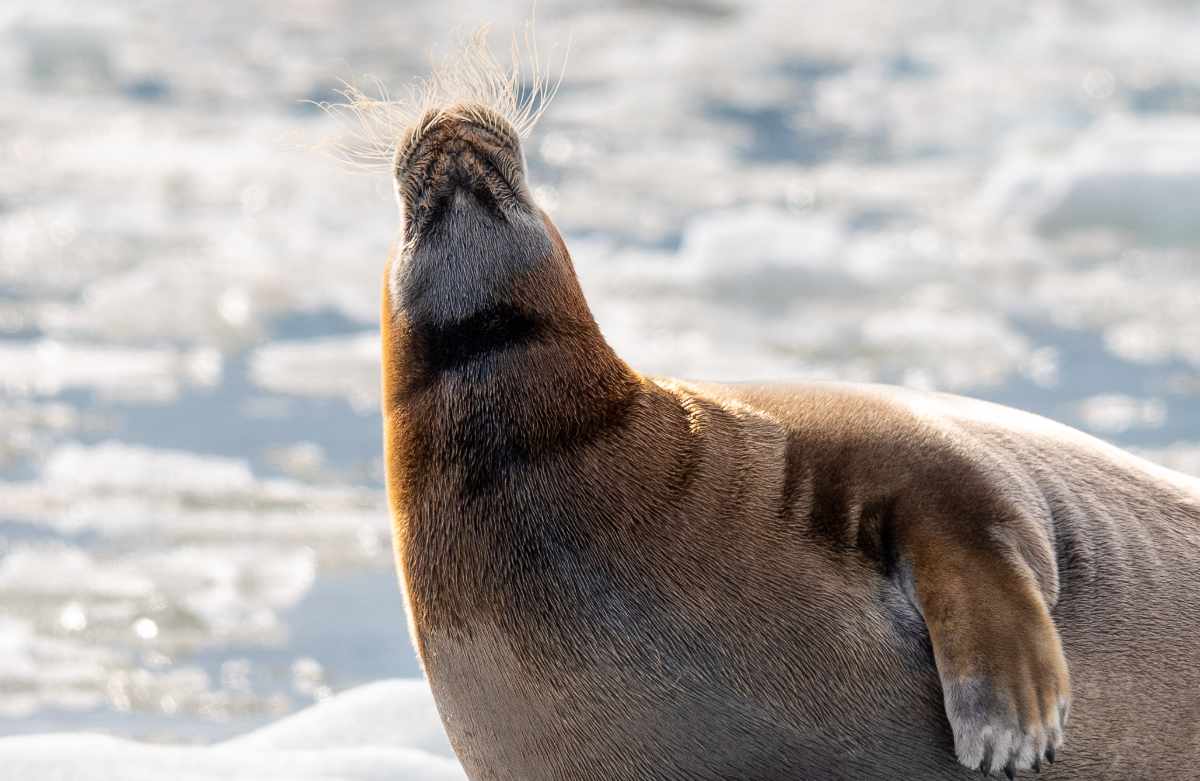
The nose of a bearded seal serves an important role thanks to its highly sensitive tactile hairs, which help detect changes in the environment. These whiskers can pick up the vibrations and movements of prey in dark waters. Their vision on land is limited, but they have good underwater vision and are adapted for low light environments.
Field Notes: Behavior & Biology
How does the bearded seal adapt?
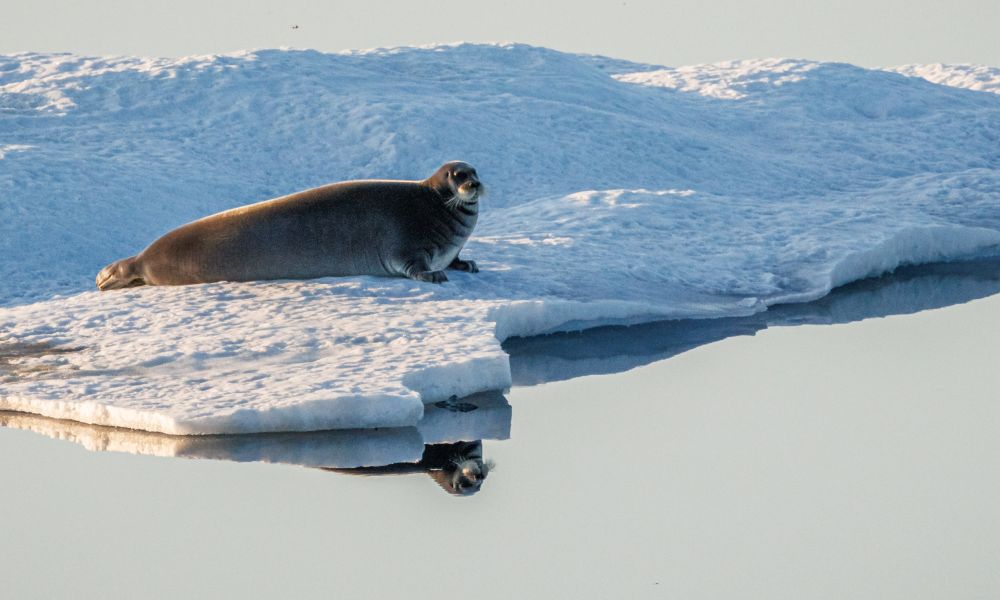
Bearded seals adapt to the Arctic by taking advantage of the ice. They rely on sea ice for feeding, resting, pupping and protection. They like to stay near leads, polynyas and ice edges, which they can use to haul themselves out of the water. You may also see them sticking their noses up through breathing holes.
Their nose is also special and contains a maze of internal bones that help heat and humidify the air. This helps reduce heat loss. And if you look closely, you’ll see they don’t have ear flaps like other seals. This reduces drag in the water and increases swimming efficiency.
Who are their predators?
Their main predators are polar bears, orcas, and Greenland sharks. Walruses may occasionally kill seal pups.
How big can they get?
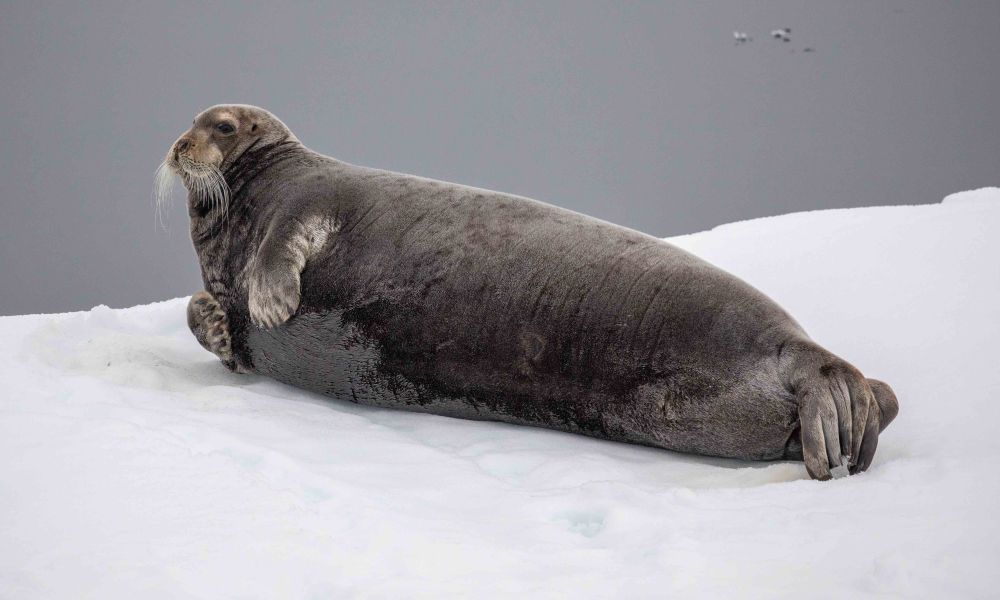
Bearded seals can get as large as 2.7 m (9 ft) long and up to 408 kg (900 lbs). These are the largest Arctic seal species. The southern elephant seal is the largest seal, but you’ll need to go to Antarctica to see them. However, bearded seals are smaller than other pinnipeds such as the walrus. A typical walrus is 2.1-3.6 m (7-12 ft) long.
What do they eat?
Bearded seals are benthic feeders. This means they feed on or near the bottom of the seabed. Here, they find Arctic cod, sculpin, flatfish, clams, crabs, shrimp, and worms.
What do you call this animal?
| English | Bearded Seal |
| Danish | Skægsæl |
| Chinese | 鬚海豹 (Xū hǎibào) |
| Swedish | Skäggsäl |
| Finnish | Viiksihylje |
| Norwegian | Storkobbe |
| Polish | Foka brodata |
| Japanese | シワヒモアザラシ (Shiwahimo azarashi) |
| Spanish | Foca barbuda |
| French | Phoque barbu |
Want to see bearded seals in the wild?
Reach out to our team to learn more about our voyages any time!