
Dunlin
On the tundra wetlands of Svalbard and Iceland, you might catch a flash of movement near the waterline. Small, restless, and remarkably fast, the dunlin is easy to overlook until you watch it work. It probes the mud with a slightly downcurved beak, reading invisible signals beneath the surface. In summer plumage, the black belly patch makes it unmistakable. Scan the shoreline carefully on any Arctic expedition and you will often find one feeding within meters of the Zodiac.
Dunlin At a Glance
| Scientific Name | Calidris alpina |
| Population | Estimated 3–7 million individuals globally |
| Regions | Circumpolar Arctic and north temperate regions across Europe, Asia, and North America |
| Destinations | Jan Mayen, Iceland, Canada, Svalbard, Greenland, Norway, Scotland, and more |
| Average Length | 17–21 cm (6.7–8.3 in) |
| Average Weight | 40–65 g (1.4–2.3 oz) |
| Diet Habits | Insects, larvae, worms, small crustaceans, and mollusks |
Did You Know
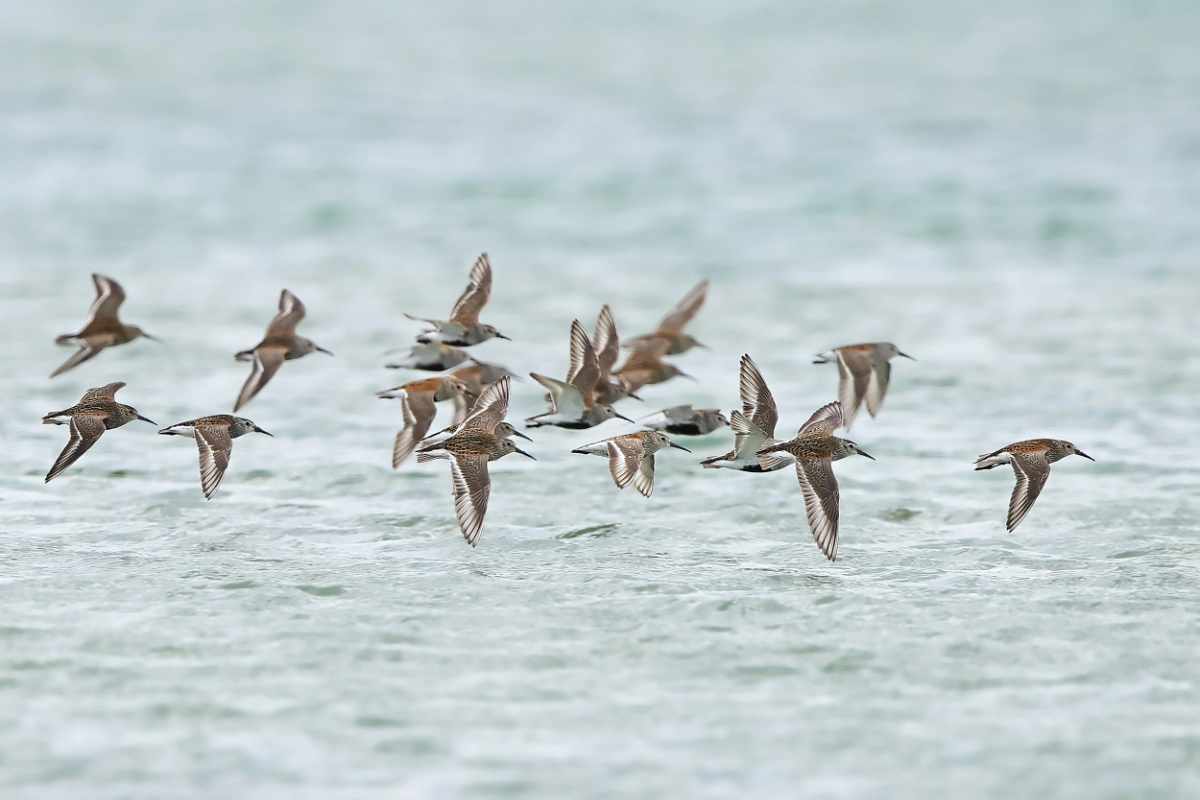
The dunlin can reach speeds of 72–88 km/h in flight. That makes it faster than many of the raptors that hunt it, which is why the species has survived across the circumpolar Arctic for thousands of years.
Field Notes: Behavior & Biology
What does a dunlin look like?
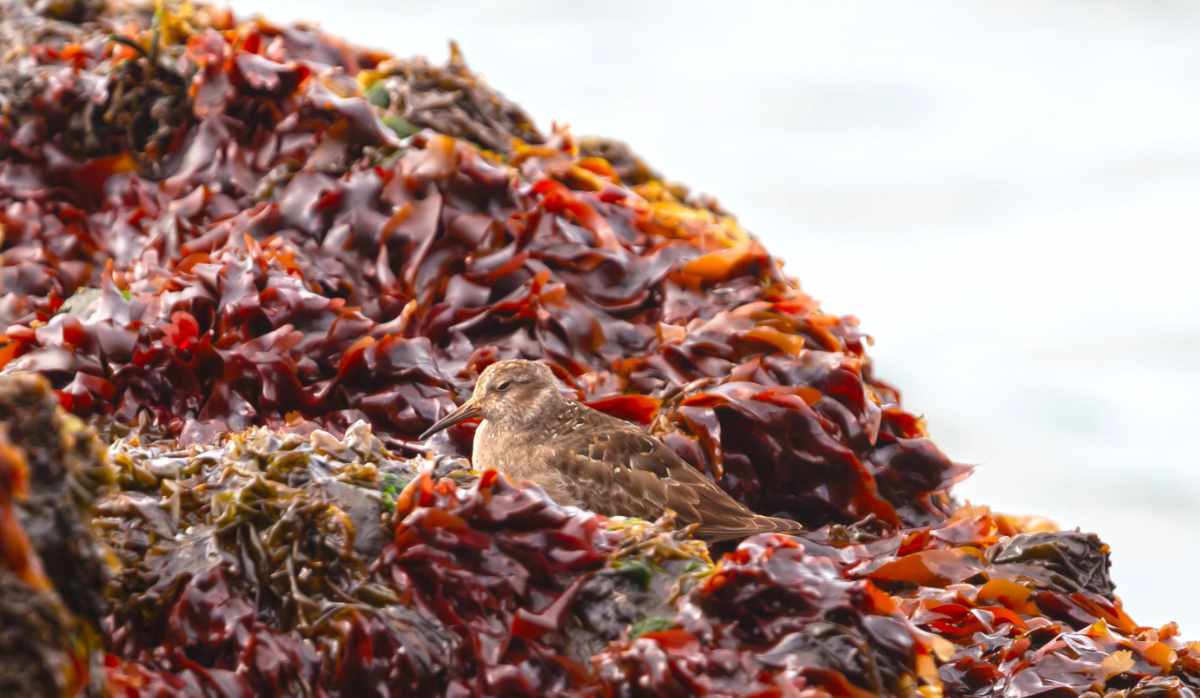
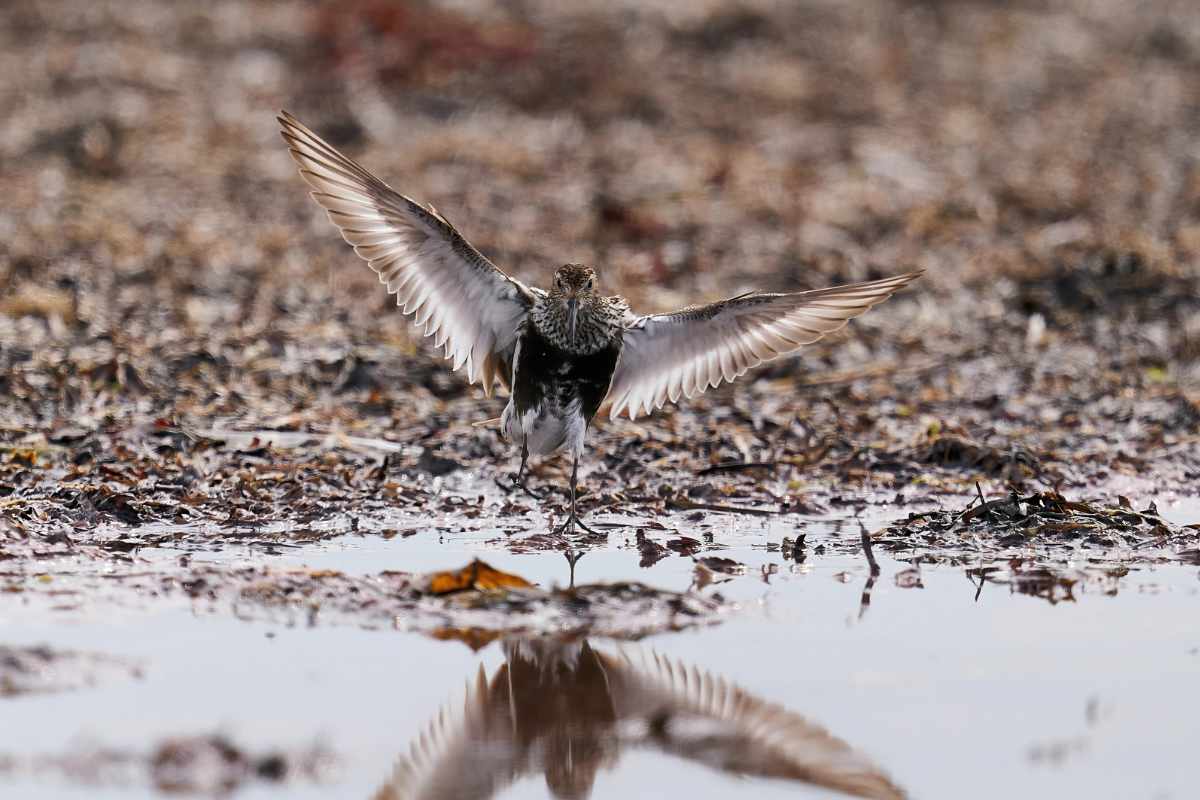
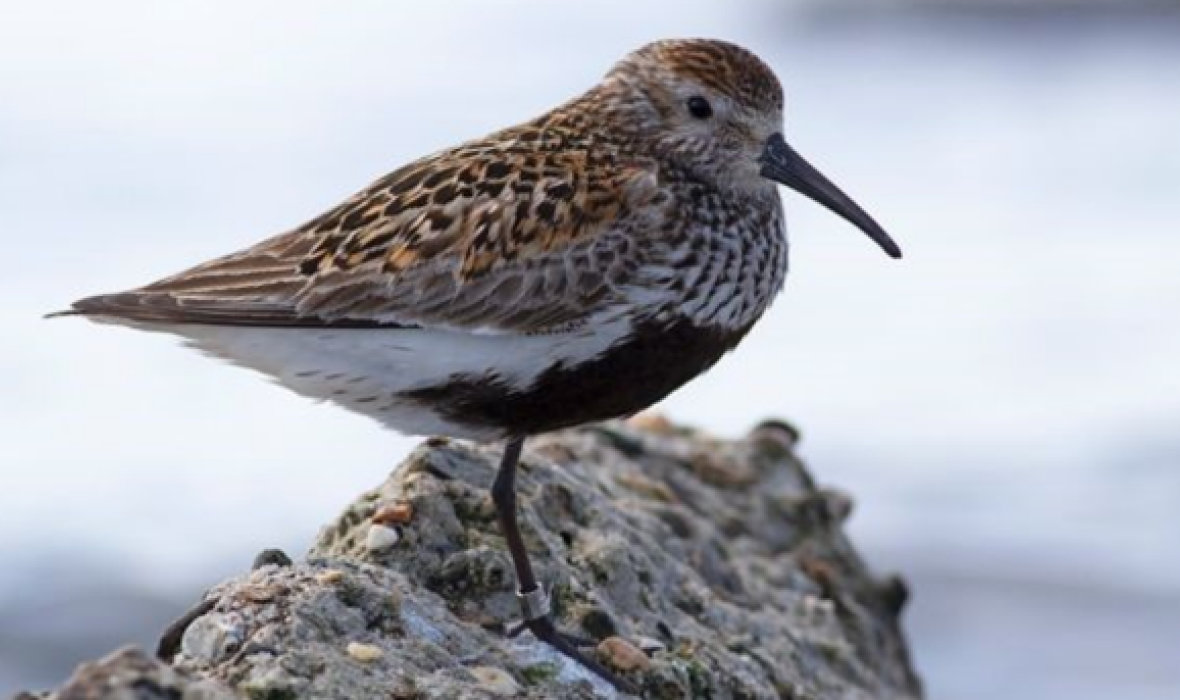
The dunlin is a small wader with a compact build and a bill that droops slightly at the tip. In summer, it shows a brown-and-rusty back, a streaked breast, and a bold black patch on the belly. The legs and bill are black. In winter, the plumage simplifies to gray-brown above and white below, making it harder to pick out on tidal flats unless you know what you are looking for. Juveniles share the summer adult’s coloring but with a more spotted belly and softer yellow-brown edging on the wing feathers.
Where does the dunlin live?
As a wader, the dunlin favors wet, muddy coastal and upland habitats. It breeds in a circumpolar arc across the Arctic and several north temperate regions, with small numbers breeding in western Svalbard, particularly around Isfjorden and Kongsfjorden, and on Bjørnøya. During migration, it travels thousands of kilometers and can be found feeding on tidal flats and estuaries along European coastlines.
How has the dunlin adapted to Arctic conditions?
The dunlin’s primary cold-weather adaptation is to leave. It breeds on tundra during the brief summer peak of invertebrate activity, then migrates thousands of kilometers to temperate and subtropical coastlines for winter, exploiting the Arctic’s seasonal abundance without enduring its harshest months.
For the breeding season itself, a touch-sensitive bill finds prey quickly in wet tundra and tidal mud. Rusty-brown summer plumage blends into the mottled tundra ground. The dunlin also completes its breeding cycle rapidly relative to its body size, racing to fledge chicks before the season closes. In winter, the plumage shifts to a muted gray-brown that is equally well-matched to tidal flats and muddy estuaries.
What was the bird previously called?
The dunlin was formerly known as the red-backed sandpiper. The name referred to the rusty-red coloring on the back in summer plumage. The name “dunlin” comes from a diminutive of “dun,” the gray-brown of its winter plumage.
How big is a dunlin?
Dunlins average 17–21 cm in length, with a wingspan of 32–36 cm (12.6-14.2 in) and a weight of 40–65 g. Smaller and more slender than the purple sandpiper, the other shorebird you are likely to encounter in similar Arctic habitats.
What does the dunlin eat?
Dunlins feed on small invertebrates in tidal zones: insects, larvae, marine worms, mollusks, and crustaceans. That slightly curved bill lets the bird probe wet mud and read prey by touch rather than sight.
Are they endangered?
Despite a global population estimated at 3–7 million, dunlin numbers have been declining for several decades. The species is classified as Least Concern on the IUCN Red List. Habitat loss in wintering and staging areas, particularly coastal wetlands, is the primary driver.
What do you call this animal?
| English | Dunlin |
| Danish | Almindelig ryle |
| Chinese | 黑腹滨鹬 (Hēi fù bīn yù) |
| Swedish |
Kärrsnäppa
|
| Finnish |
Suosirri
|
| Norwegian |
Myrsnipe
|
| Polish |
Biegus zmienny
|
| Japanese |
ハマシギ (Hamashigi)
|
| Spanish |
Correlimos común
|
| French |
Bécasseau variable
|
Want to see dunlins in the wild?
Reach out to our team to learn more about our voyages any time!