
Ilulissat
The Icefjord
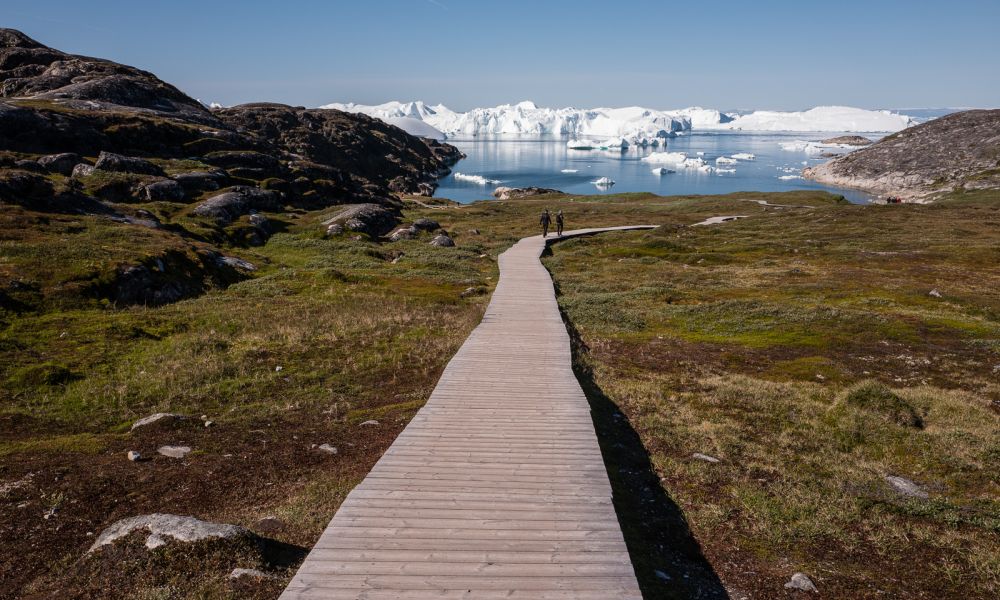
The Ilulissat Icefjord was inscribed as a UNESCO World Heritage Site in 2004, covering the fjord and a portion of the inland ice. Its source, Sermeq Kujalleq, translates roughly as “the glacier that calves.” It drains a significant section of the Greenland Ice Sheet and moves at speeds of 40–50 meters (130–165 feet) per day, making it one of the fastest-moving glaciers on Earth. The bergs it produces are vast, large enough to dwarf buildings, grinding against each other as they shift in the shallows.
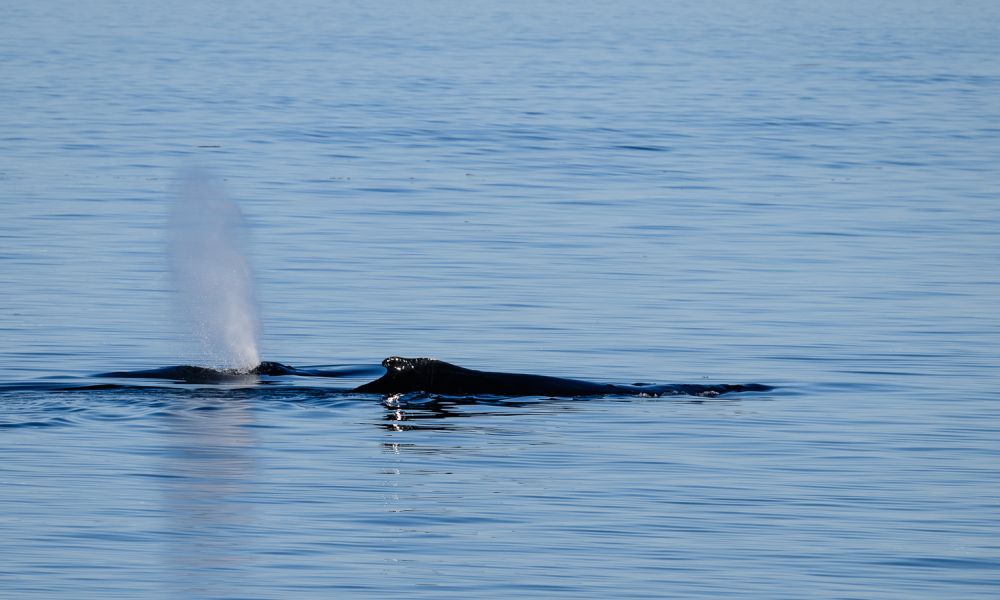
In summer, the fjord draws wildlife as reliably as it draws researchers. Humpback whales feed in the nutrient-rich waters near the mouth of the fjord, and minke whales are frequently sighted alongside them. Glaciologists have used Ilulissat as a research base for decades. Nowhere in the Northern Hemisphere offers a more direct window into how the planet’s ice is changing.
Getting There
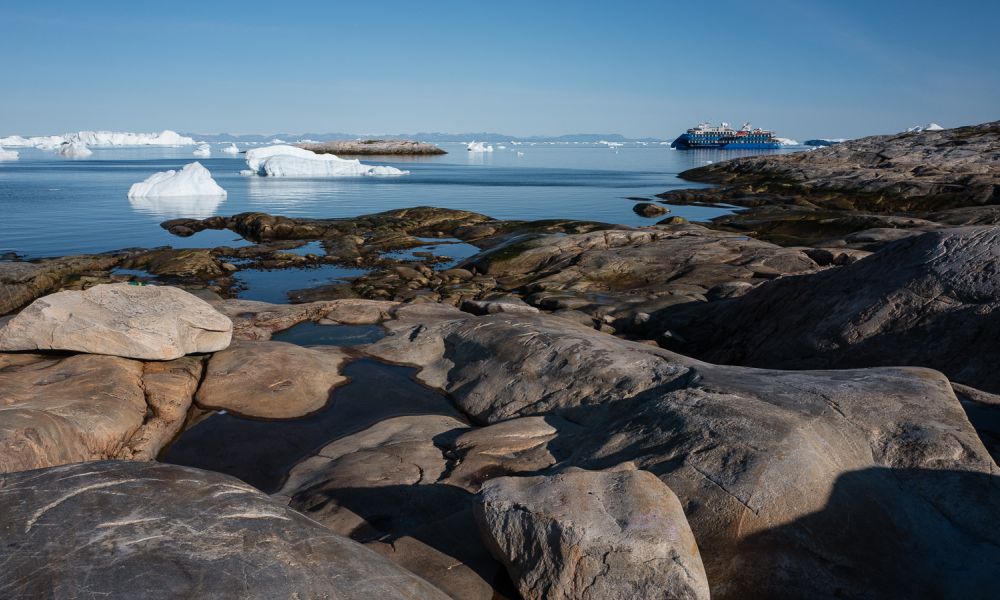
Polar Latitudes Expeditions guests arrive by ship, anchoring near the pier to go ashore by Zodiac. The approach by sea gives you something no airport transfer can: icebergs rising from the water in every direction as the town comes into view.
Independent travelers reach Ilulissat by air. The airport is served by domestic flights from Nuuk and international connections from Iceland and Denmark. Flights operate on smaller turboprop aircraft due to runway limitations, and baggage weight restrictions apply. If you are traveling as part of a Polar Latitudes West Greenland expedition, the logistics are handled for you.
The Town
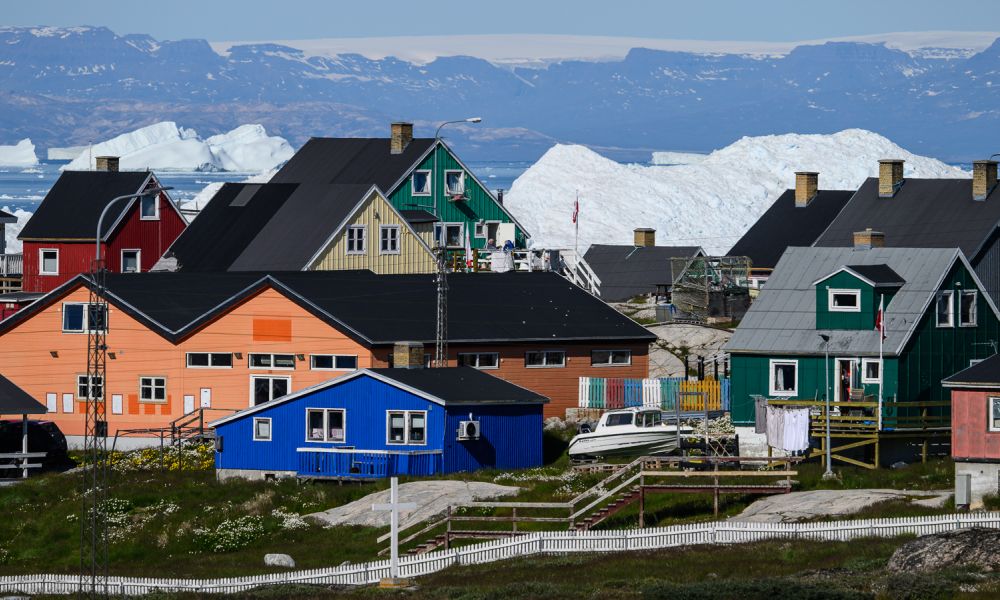
Ilulissat has a population of around 4,900, making it the third-largest settlement in Greenland and the largest in the Avannaata municipality. It sits approximately 300 km (186 miles) north of the Arctic Circle on the west coast of Greenland, with the icefjord to the south and the waters of Disko Bay to the west.
The town was founded in 1741 by the Danish merchant Jacob Severin as a trading post called Jakobshavn, established to trade with the Inuit community at Sermermiut, a settlement 2 km (1.2 miles) to the south that was inhabited until 1850. The Greenlandic name, Ilulissat, means “icebergs.”
The town’s ties to Arctic exploration run deep. Knud Rasmussen, regarded as the foremost Arctic explorer of his era, was born here in 1879. Jørgen Brønlund, one of three members of the 1906 Danmark Expedition who did not return from the ice, was also from Ilulissat. Fishing remains the primary industry; tourism is a growing second.
On the Ice and Beyond
The icefjord is accessible on foot via a well-marked trail leading to viewpoints above the calving front. The hike is not demanding, but what you see from the top earns every step. Icebergs the size of apartment buildings sit grounded in the shallows below, cracking and shifting in near silence.
The surrounding area supports a range of wildlife. Arctic foxes move through the scrub above town. Arctic hares are common along the trail margins. Polar bears are occasionally sighted in the broader region. Offshore, humpback and minke whales are regular summer visitors, drawn by the cold, plankton-rich waters of Disko Bay.
Practical Details
Ilulissat operates on Western Greenland Summer Time (WGST), GMT-3. In midsummer, the sun barely dips below the horizon and the town runs under a long, amber light through the night. In midwinter, daylight narrows to a few hours. Most Polar Latitudes Expeditions voyages visit during the summer season, when the icefjord is at its most active and wildlife sightings are most frequent.
Travelers coming from Nuuk can reach Ilulissat by air on domestic connections, or by sea as part of a Polar Latitudes Expeditions, which stops at multiple sites along the route, including Eqip Sermia Glacier and Uummannaq.
Ready to see Ilulissat?
Reach out to our team to learn more about our voyages any time!